


Last Updated: November 14, 2026
Quick Summary
Pulley alignment means setting two V-belt pulleys so their faces sit square and parallel to each other. Lock out the machine, clean the faces, then lay a straightedge across both pulleys and adjust until it sits flat. Recheck after tightening the mounting bolts, because they can pull the setup out of line.
- Misaligned pulleys wear out V-belts faster than almost anything else.
- Check the gap at the top and bottom of both pulleys with a straightedge.
- Uneven gaps mean the shafts are not parallel and need adjustment.
- Confirm the belt profile and pulley groove size before starting work.
- Recheck alignment after any belt change, motor move, or base adjustment.
Table of Contents
- V-Belt Pulley Alignment Procedure, Step by Step
- Pulley Alignment Methods and the Right Tool
- Pulley Alignment Tolerances and When to Recheck
- Frequently Asked Questions
V-Belt Pulley Alignment Procedure, Step by Step
Misaligned pulleys wear out V-belts faster than almost anything else, and most failures that look like bad belts are really alignment problems. Often the belt is blamed when the pulleys were never square to each other.
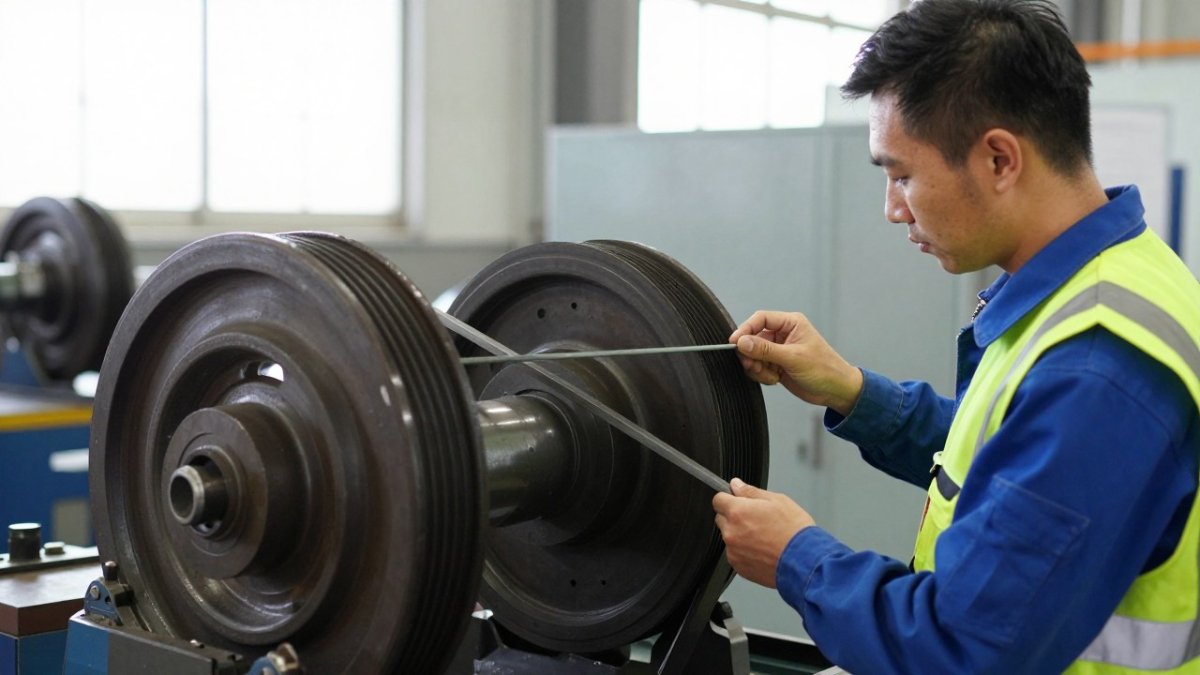
- Lock out the machine. Disconnect power and apply lockout/tagout.
- Remove the guard and clean the pulley faces. Dirt and oil hide the true alignment surface.
- Set a straightedge across the two pulley faces. Check the gap at the top and bottom of both pulleys.
- Check for angular misalignment. Uneven gaps mean the shafts are not parallel.
- Adjust the motor or driven unit until the straightedge sits flat on both pulleys.
- Recheck after tightening. Mounting bolts can pull the setup out of line.
Note: Confirm the exact belt profile and pulley groove size before you start. A mismatch causes problems even when the pulleys are aligned.
Pulley Alignment Methods and the Right Tool
Use V-belts that match your drive’s profile and groove size.
Pulley Alignment Tolerances and When to Recheck
Recheck alignment after any belt change, motor move, or base adjustment, and again after the first few hours of operation, when the belt seats and the frame settles. If the belt shows edge wear, glazing, or squealing on startup, check alignment first. Tolerance limits depend on the drive, so consult the manufacturer’s specifications. You can also check which belt profile and size fit your machinery before you recheck.
We recommend logging each alignment check, date, reading, and any adjustment, to spot a pattern before a failure stops production.
Need V-belts or help matching a replacement? Contact our team for a quick answer.
Frequently Asked Questions
How do you align V-belt pulleys?
Lock out the machine first, then place a straightedge or alignment bar across the faces of both pulleys. Check that the straightedge touches both sheaves evenly at each point. Adjust the motor or driven shaft until contact is even, then recheck the belt tension. Repeat the check after the first run, because a new belt can settle and shift the reading. Following the same order each time keeps results consistent across maintenance visits.
How can I check if my pulleys and belt are aligned correctly?
Use a straightedge or a laser alignment tool to compare the sheave faces. Look for a gap under the straightedge at any point, which indicates angular or parallel misalignment. Check the belt for uneven side wear or glazing on one edge, since these point to misalignment. Measure again after adjusting, and confirm the belt runs straight without rubbing the flange. A simple visual check after each adjustment catches most faults early.
How often should V-belt pulley alignment be checked?
Check alignment after every belt installation, after any motor or shaft work, and as part of routine preventive maintenance. Drives under heavy load or high vibration need more frequent checks. Record each reading so you can spot a drift trend before it causes premature belt failure. Your plant’s maintenance schedule should set the exact interval for each drive.

Leave a Reply