

Last Updated: November 15, 2026
Quick Summary
Conveyor belt failure is usually preventable when you inspect the belt on a fixed schedule and catch small damage early. Use a written maintenance checklist every shift, check splices and edges for fraying or tears, and fix tracking problems in small adjustments before they shorten belt life.
- Run a written maintenance checklist every shift and review logs weekly.
- Walk the full length of the belt, not just the busy sections.
- Check splices first, since they are the weakest point of the belt.
- Adjust tracking in small steps at both ends and the midpoint, then recheck.
- Lock out the drive before adjusting tracking, because the belt must not run under load.
Table of Contents
- Set Up a Conveyor Belt Maintenance Checklist
- Spot Early Types of Conveyor Belt Damage
- Stop Conveyor Belt Tracking Problems Before They Shorten Belt Life
- Frequently Asked Questions
Conveyor belt failure rarely arrives without warning. Most plants see early signs of wear, misalignment or slippage weeks before a belt snaps. At AQUIL STAR General Trading LLC, we supply V-belts and conveyor belting across the UAE, and the same problems recur that lead to conveyor belt failure.
Set Up a Conveyor Belt Maintenance Checklist
Start with a written checklist every shift can follow: inspect belt edges and surface for cuts, tears or fraying; check tension and sag between idlers; confirm rollers, pulleys and bearings turn freely; clean carryback and spillage from the return side; and log every finding to reveal trends.
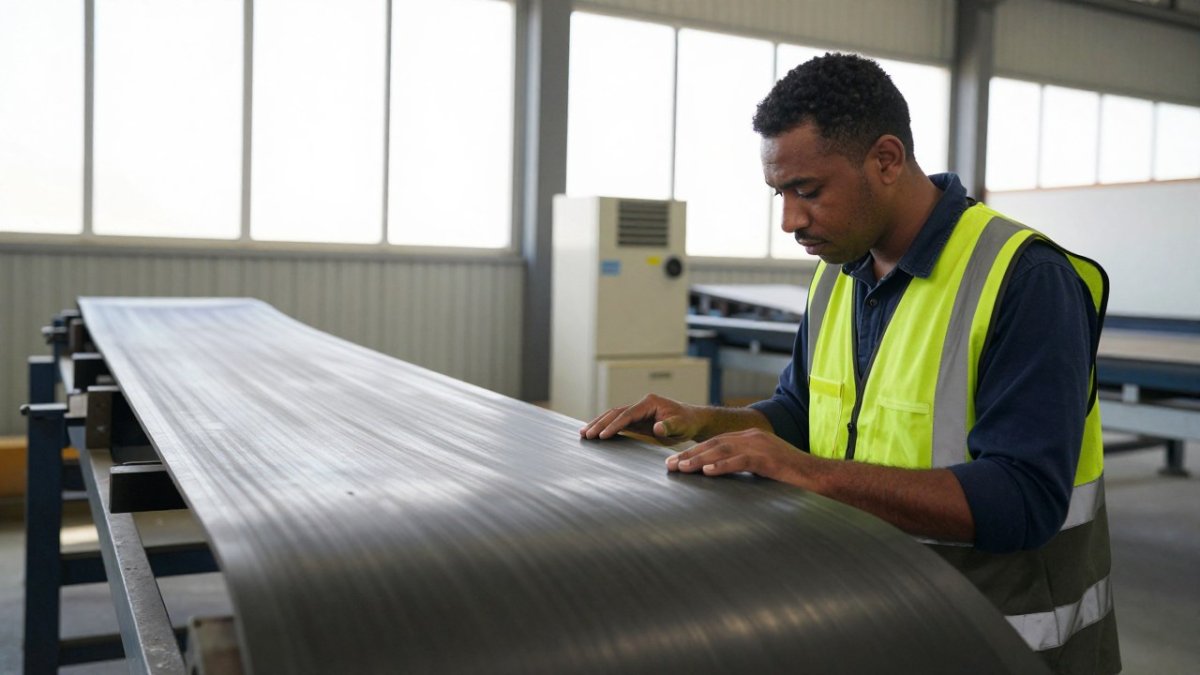
Keep the checklist at the machine and review logs weekly.
Spot Early Types of Conveyor Belt Damage
Most belt failures begin as small, specific damage: edge fraying (misalignment or rubbing), surface cuts and gouges (sharp material or a poorly placed chute), longitudinal tears (often starting at a damaged splice), splice separation (check splices first, since they are the weakest point), and uneven wear (tracking or loading needs attention).
Walk the full length of the belt, not just the busy sections. A failure analysis of conveyor belt damage caused by falling material found that impact damage from falling material is a major source of harm, and selecting a suitable belt type helps reduce it. Catching damage early means a planned repair instead of an emergency stop.
Most belt failures begin with small, specific damage that is easy to miss if you only check busy sections.
| Damage type | Likely cause | Action |
|---|---|---|
| Edge fraying | Misalignment or rubbing | Check tracking and adjust idlers |
| Surface cuts and gouges | Sharp material or poorly placed chute | Inspect loading points and repair early |
| Longitudinal tears | Often start at a damaged splice | Inspect splices and plan a repair |
| Splice separation | Splices are the weakest point | Check splices first |
| Uneven wear | Tracking or loading issues | Address tracking and loading |
Stop Conveyor Belt Tracking Problems Before They Shorten Belt Life
Tracking problems quietly wear belts down: a drifting belt rubs its edges against the frame and frays, shortening belt life. Check tracking at both ends and the midpoint under normal load, adjust idlers and pulleys in small steps, then recheck; if the same spot keeps drifting, look for material build-up on rollers or uneven loading.
Never adjust tracking while the belt runs under load. Lock out the drive first, or you risk injury.
Consistent tracking, correct tension and clean components give the best chance of avoiding sudden failure. For replacements, reference the existing belt’s width and type before ordering; a sample or photo of the used belt helps our team find the right match.
Ready to keep your conveyor running? Contact AQUIL STAR General Trading LLC for genuine Bando V-belts and conveyor belting, with stock ready for fast delivery across the UAE.
Frequently Asked Questions
What are the common causes of conveyor belt failure?
Conveyor belt failure usually comes from a small set of causes: uneven wear, misalignment that makes the belt rub against the frame, improper tension, material carryback that builds up on rollers and pulleys, and impact damage from heavy material falling onto the belt. Choosing a suitable belt type can reduce damage caused by falling material. Inspecting the belt and its components regularly lets you catch these causes before they turn into a tear or a break.
How often should a conveyor belt be inspected?
Run a visual inspection of the belt, rollers, pulleys and splices at the start of every shift or at least daily, and record what you see. Schedule a more detailed check of tracking, tension, cleaners and splices at regular intervals set by your operating hours and the material you convey. A written checklist with a fixed frequency makes it easier to spot gradual changes, such as edge wear or a splice that is starting to lift, before they cause an unplanned stop.
What should you check when troubleshooting conveyor belt problems?
Start by checking alignment and tracking, then belt tension, then the condition of idlers, pulleys and bearings, and finally the belt cleaners and skirting. Look for signs such as belt edge fraying, material build-up, unusual vibration and sag. Work through the system in this order so you find the root cause rather than just the symptom. Always lock out the conveyor before you inspect or touch moving parts.

Leave a Reply