


Last Updated: November 19, 2026
Quick Summary
Before ordering replacement V belts, confirm the profile and size, since a belt must match the pulley groove to fit at all. Check the sidewall for a printed profile, measure the top width with a caliper, and measure belt length, pulley diameters and centre distance. Inspect the old drive for worn grooves and glazing before you order.
- Check the sidewall first, since the profile is often printed or moulded into the rubber.
- Measure the top width across the widest point with a caliper.
- Compare the belt against the pulley groove to prevent slipping and fast wear.
- Replace multiple belts in a drive as a matched set to avoid uneven load.
- Inspect pulley grooves for wear, cracks or rust, and look for glazing or oil on the belt.
Table of Contents
- Identifying the V-Belt Profile and Cross Section
- How to Measure V-Belt Size Without a Readable Code
- Matching Belts as a Set and Inspecting the Old Drive
- Frequently Asked Questions
Ordering the wrong replacement V-belt costs more than the belt itself, a stopped line and a second order can eat a full day. Here are the checks that prevent these mistakes. Start with profile and size, which decide whether a belt fits at all.
Identifying the V-Belt Profile and Cross Section
The profile is the belt’s cross-section shape and must match the pulley groove. For help confirming the right profile for your machinery, see choosing the right V-belt. Classical and narrow sections are not interchangeable.
- Check the sidewall. The profile is often printed or moulded into the rubber.
- Measure the top width with a caliper across the widest point.
- Compare against the pulley groove. A belt sitting too high or low will slip and wear fast.
The three checks below cover what to confirm on the belt and the pulley before you order.
| Check | What to do | Why it matters |
|---|---|---|
| Sidewall | Look for the profile printed or moulded into the rubber | Confirms the belt’s profile |
| Top width | Measure across the widest point with a caliper | Identifies the cross-section size |
| Pulley groove | Compare the belt against the groove | Prevents slipping and fast wear |
How to Measure V-Belt Size Without a Readable Code
Many old belts have worn codes, so measure instead. Run a flexible tape around the outside of the drive for approximate length, then confirm with a second measurement.
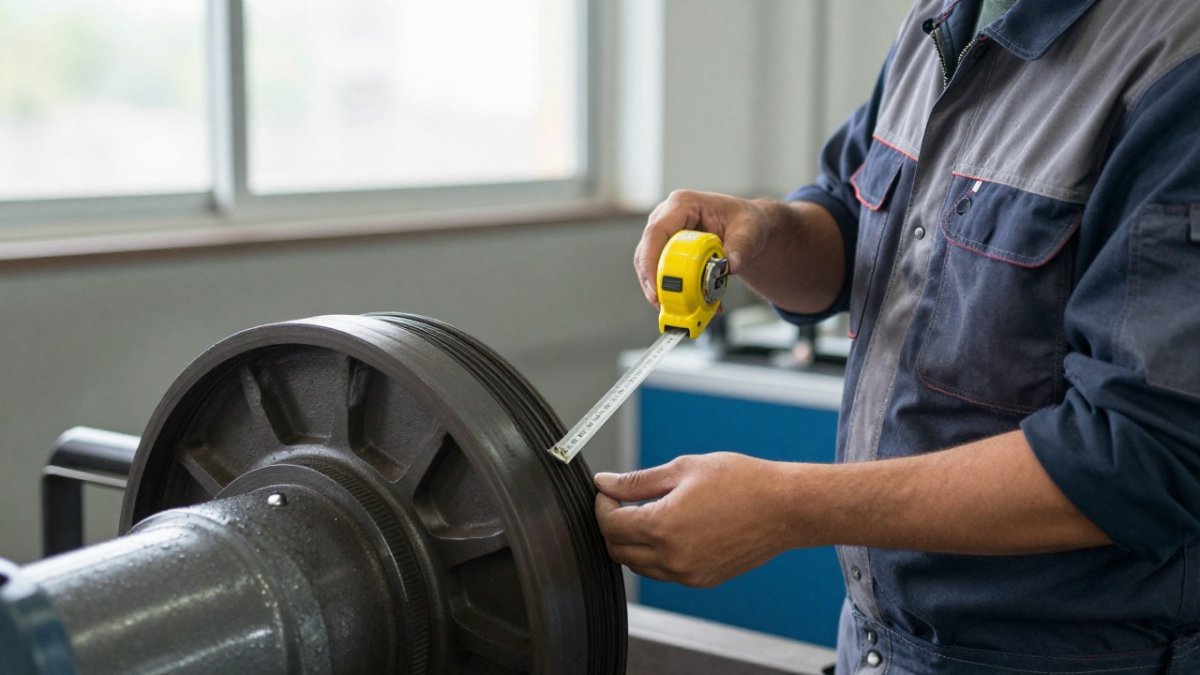
- Belt length: the circumference the belt must cover.
- Pulley diameters: the size of each sheave.
- Centre distance: the gap between pulley centres.
Matching Belts as a Set and Inspecting the Old Drive
When a drive uses several belts, replace them as a matched set. Learn how to spot signs of industrial belt slippage early before the old drive fails. Mixing old and new causes uneven load, so new belts wear out early. The guide on pulley alignment steps, tools and tolerances covers how to check this.
Inspect the old drive before ordering:
- Check the pulley grooves for wear, cracks or rust.
- Look for glazing or oil on the belt surface.
- Confirm tension and pulley alignment.
Bando V-belts are available from AQUIL STAR General Trading LLC. You can also learn how to identify genuine Bando industrial belts before reordering. Contact us at https://www.aquilstar.org/contact-us/ to discuss your requirements.
Frequently Asked Questions
How do I figure out what size V-belt I need?
Start with the belt profile and the old belt’s code if it is readable. If the code is missing or worn off, measure the outside circumference of the old belt with a flexible tape, then check the profile letter against the belt’s cross section. Send these measurements to AQUIL STAR General Trading LLC to discuss the replacement you need.
Should I replace all the belts in a matched set at the same time?
Yes. On a multiple-belt drive, replace the whole set together, using belts from the same matched batch. A single new belt runs at a different length and tension from the worn ones beside it, so the load is shared unevenly and the new belt wears out early. Matched sets help the drive run evenly and reduce unplanned stoppages.
What details should I check before ordering a replacement V-belt?
Check the profile, the belt length, the number of belts in the drive, the pulley groove sizes and the operating conditions such as heat, oil or dust. Note any sheave wear or misalignment you see, because these affect which belt will last. Bring these details to your order so the supplier can match the belt to the machine rather than to a guess.

Leave a Reply