

Last Updated: November 10, 2026
Quick Summary
Prevent conveyor belt slippage by checking slack-side tension first, since low tension is the most common cause and the fastest to fix. Measure slack-side sag against the belt supplier’s spec and adjust the take-up in small, even increments on both sides. Also inspect lagging, alignment, buildup, belt damage, and load levels.
- Slippage almost always traces back to one of six causes: low tension, worn lagging, misalignment, material buildup, belt damage, or overloading.
- Over-tensioning loads the motor and bearings, stretches the belt, and shortens pulley life.
- Adjusting only one side of the take-up twists the pulley and causes the belt to track off-centre.
- If the belt rides to one edge, check pulley squareness, idler alignment, and belt tracking before adding tension.
- AQUIL STAR has supplied V-belts and conveyor belting across the UAE since 1994.
Table of Contents
- Conveyor Belt Slippage Causes and Solutions
- Conveyor Belt Tension Adjustment and Alignment Troubleshooting
- Your Conveyor Belt Maintenance Checklist and Next Step
- Frequently Asked Questions
Conveyor Belt Slippage Causes and Solutions
Conveyor belt slippage is the loss of grip between the belt and the drive pulley, and it almost always traces back to one of six causes: low tension, worn lagging, misalignment, material buildup, belt damage, or overloading. At AQUIL STAR General Trading LLC, we have supplied V-belts and conveyor belting across the UAE since 1994.
Slippage shows up in small ways first: the belt slows under load, squeals at start-up, tracks off-centre. Then a line stops.
What causes conveyor belt slippage? Common factors include slack-side tension that is too low, a drive pulley that cannot grip, a belt that is contaminated or worn, and a load the system was never sized for.
Tension is the most common cause and the fastest to check, so start there.
Slippage almost always traces back to one of six causes, each with its own fix.
| Cause | What it looks like | Fix |
|---|---|---|
| Low tension | Belt slows under load, squeals at start-up | Measure slack-side sag, adjust take-up evenly |
| Worn lagging | Drive pulley cannot grip the belt | Check lagging for wear, glazing, or oil |
| Misalignment | Belt tracks off-centre | Check pulley squareness, idler alignment, belt tracking |
| Material buildup | Contaminated belt and pulleys | Clean buildup from belts, pulleys, and idlers |
| Belt damage | Cuts, fraying, and wear on edges | Inspect belt edges for cuts, fraying, and wear |
| Overloading | Load the system was never sized for | Review load levels against conveyor capacity |
Conveyor Belt Tension Adjustment and Alignment Troubleshooting
Correct belt tension is the minimum slack-side tension that keeps the belt gripped under full load, and no more. Over-tensioning is as damaging as under-tensioning. It loads the motor and bearings, stretches the belt, and shortens pulley life.
A common mistake is reaching for the tensioner the moment a belt slips. Adding tension can mask a deeper fault rather than fix it.
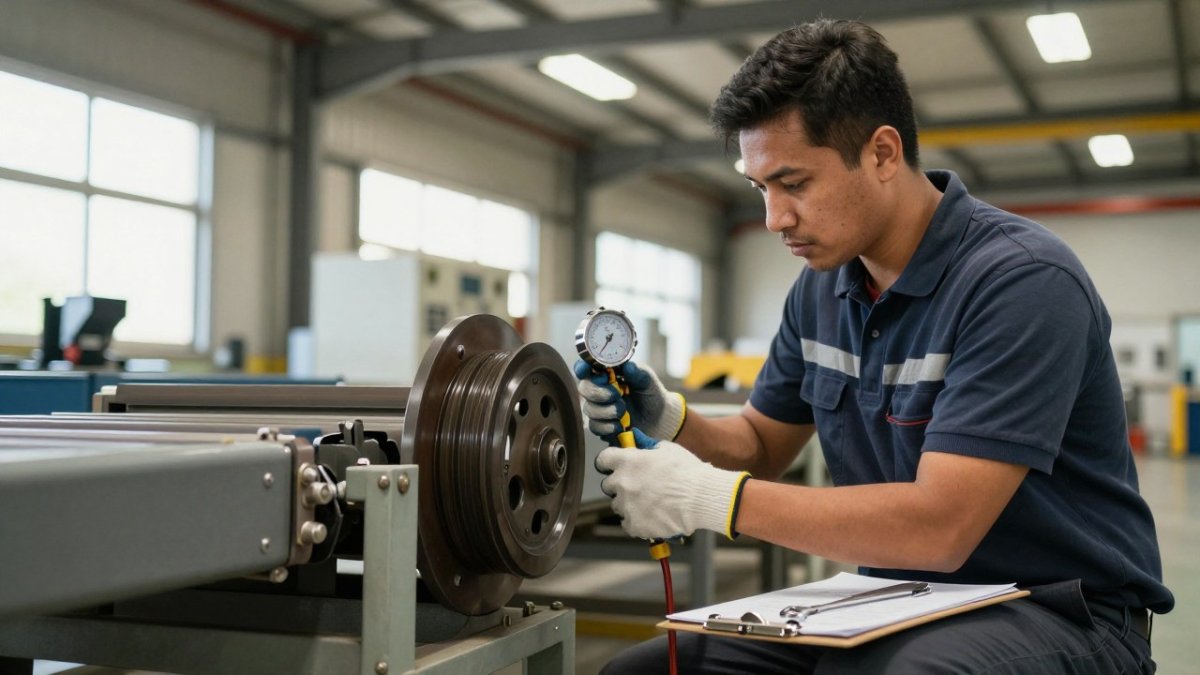
How to adjust conveyor belt tension safely:
- Lock out and tag out the drive
- Measure slack-side sag at the midpoint between pulleys
- Compare to the belt supplier’s spec
- Adjust the take-up in small, even increments on both sides
- Run empty, then loaded, and re-measure
- Record the final setting
Watch out: adjusting only one side of the take-up twists the pulley and causes the belt to track off-centre. Always move both sides equally.
Alignment problems look like slippage but are not. If the belt rides to one edge, check pulley squareness, idler alignment, and belt tracking before adding tension.
Your Conveyor Belt Maintenance Checklist and Next Step
Preventive maintenance is generally more effective than quick fixes. A short regular inspection can catch slip risks before they stop a line.
- Measure slack-side tension against spec
- Check drive pulley lagging for wear, glazing, or oil
- Clean material buildup from belts, pulleys, and idlers
- Confirm belt tracking and pulley alignment
- Inspect belt edges for cuts, fraying, and wear
- Review load levels against conveyor capacity
- Listen for squeal or slip at start-up
- Log motor and bearing temperature
Selecting a belt suited to the application also matters. AQUIL STAR supplies a range of V-belts and conveyor belting, including products from Bando and Optibelt, to help match belts to your requirements.
Slippage is a symptom, not a fault. Fix the tension, the pulley grip, the buildup, and the alignment together, and the belt stays on the pulley. AQUIL STAR General Trading LLC stocks conveyor belting and V-belts from Bando and Optibelt, backed by a Just in Time delivery policy and a stocking system built for UAE plants. Get in touch with AQUIL STAR General Trading LLC and keep your lines running.
Frequently Asked Questions
How to stop a conveyor belt from slipping?
Start by checking the drive pulley for material buildup and lagging wear, then verify slack-side tension is set to the belt manufacturer’s specification. Clean the pulley face, confirm the belt is tracking centrally, and reduce the load if the belt is overfilled. If slipping persists after these checks, inspect the belt for glazing or damage and confirm the belt was correctly selected for the load and pulley diameter. A structured check of these points resolves most slippage cases without adding tension blindly.
What are the two major causes of belt slippage?
The two most common causes are insufficient friction at the drive pulley and incorrect belt tension. Friction drops when lagging is worn, oily, or coated in material buildup, and tension falls when the take-up system is not adjusted or the belt has stretched. Misalignment and overloading make both worse. Addressing friction and tension first, then checking alignment and load distribution, covers the majority of conveyor belt slippage causes and solutions maintenance teams face.
Should you use belt dressing or spray to stop conveyor belt slippage?
Belt dressing is a short-term measure and can mask the real problem. Many dressings attract dust and material, which reduces grip over time and contaminates the pulley face. Fix the root cause instead: clean the pulley and belt, restore correct slack-side tension, and replace worn lagging. If you use a dressing, confirm with the belt supplier that it is compatible with your belt compound and never apply it as a substitute for tension adjustment or lagging repair.

Leave a Reply