


Last Updated: November 5, 2026
Quick Summary
Durable v-belts are worth it for farm machinery running heavy, continuous loads in dust, debris and changing weather, where a slipping belt costs more than the belt itself. Standard belts suit small pumps, while heavier or high-load drives need a stronger, reinforced belt matched to the job.
- Standard V-belts can suit low- to medium-horsepower applications such as small pumps.
- Heavier continuous-duty machines need more margin than a standard belt provides.
- Reinforced belts suit heavy, high-load drives.
- Replace a belt when you see cracking, glazing, fraying or slip under load.
- Inspect the belt and pulley together, since a worn belt on a new pulley wears fast.
Table of Contents
- Why Agricultural Machinery Needs Heavy-Duty V-Belts
- V-Belt Service Factor Selection Guide
- Kevlar V-Belts for Farm Equipment and When to Replace Your Agricultural V-Belt
- Frequently Asked Questions
Why Agricultural Machinery Needs Heavy-Duty V-Belts
Farm equipment runs in dust, debris and changing weather, and the durable v-belts take the punishment. Market researchers project the global V-belt market at US$5.3 billion in 2026, with growth of about 5.2% a year through 2033 (Persistence Market Research V-belt market forecast). At AQUIL STAR General Trading LLC, we see the same demand from UAE farm managers who need belts that hold up.
Mitsuboshi says its agricultural transmission belts are designed to withstand dust, debris and varying weather (Mitsuboshi agricultural transmission belts flyer). That matters in the field, where a slipping belt costs more than the belt itself.
V-Belt Service Factor Selection Guide
Start with the job, not the belt. A standard V-belt can suit some low- to medium-horsepower farm applications, such as small pumps (Power-trans.org on V-belts in agricultural machinery). Heavier, continuous-duty machines need more margin.
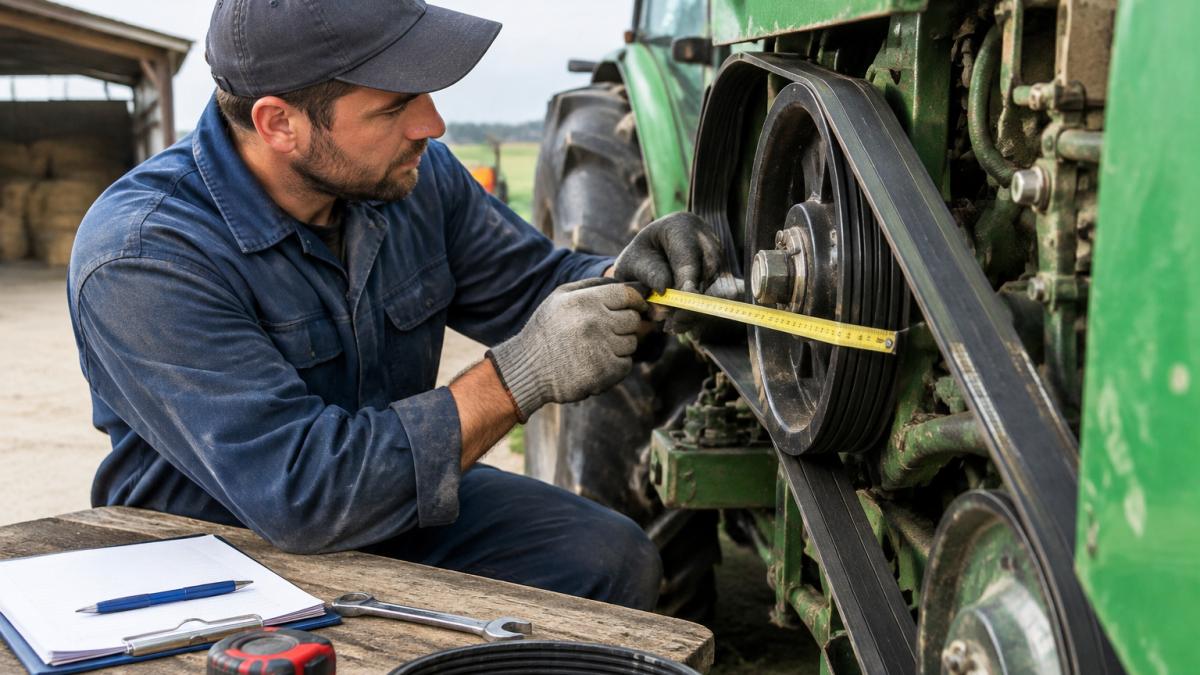
Match the durable v-belts to the load, the drive and the environment. Your supplier can confirm the right profile and length for your equipment.
The article’s selection guide turns on matching the belt to the job, so the summary below sets out how the belt type and the load line up.
| Application | Belt suitability | Key point |
|---|---|---|
| Small pumps | Standard V-belt | Low- to medium-horsepower work |
| Heavier continuous-duty machines | Needs more margin | Choose a stronger belt |
| Heavy, high-load drives | Reinforced belt | Suits demanding drives |
| Any drive | Confirm with supplier | Profile and length must match |
Kevlar V-Belts for Farm Equipment and When to Replace Your Agricultural V-Belt
Reinforced belts suit heavy, high-load drives. Replace a belt when you see cracking, glazing, fraying or slip under load. Watch out: a worn belt on a new pulley wears fast, so inspect both together.
The exact service life depends on load, temperature and maintenance. Check your own operating hours and failures.
For current prices and stock on Bando and Aquil Star V-Belts products, contact AQUIL STAR General Trading LLC. Pricing depends on quantity, dates and delivery.
Frequently Asked Questions
How long do agricultural V-belts last?
Service life depends on load, operating hours, pulley alignment, tension and exposure to heat, oil and dust. Under heavy agricultural use, belts are typically inspected each season and replaced when cracking, glazing, fraying or visible stretch appear. Track operating hours and inspect the belt during scheduled maintenance rather than relying on a fixed date. For specific replacement intervals, ask AQUIL STAR General Trading LLC for guidance based on your equipment.
Are Kevlar-reinforced V-belts suitable for agricultural machinery?
Kevlar-reinforced V-belts are built with aramid fibre cords that resist stretch under load, which helps maintain belt tension and reduces slip on high-torque drives. This makes them a common choice for heavy farm equipment where consistent power transfer matters. Not every machine needs them, however. Low- to medium-horsepower applications such as small pumps can often run standard V-belts without issue. Match the belt construction to the drive’s actual load, and confirm the correct section and length with the equipment manufacturer before ordering.
How do I choose the right V-belt for a tractor or harvester?
Start with the belt profile and length printed on the old belt or listed in the equipment manual, then check the service factor, which reflects how demanding the drive is. Heavy, continuous loads call for a higher service factor and a heavy-duty construction. Measure the belt length accurately, since a wrong length causes slip or premature wear. Pricing depends on quantity, belt type and delivery timing, so request a quote from AQUIL STAR General Trading LLC on its website before placing an order.

Leave a Reply