

Last Updated: November 4, 2026
Quick Summary
Industrial belt slippage shows up as squealing at startup or under load, speed loss, a burning-rubber smell, belt drift, glazed belt faces, and visible cracks or fraying. Several of these signs appearing together means the drive needs a closer look.
- Squealing at startup or under load is a common early sign of slippage.
- Check belt tension first, then pulley condition, then contamination from water, oil or dust.
- Compare belt speed with pulley speed to estimate how much the belt is slipping.
- Lock out the drive and confirm zero energy before any inspection or adjustment.
- Do not tighten a belt on worn pulleys, because that only speeds up the damage.
Table of Contents
- Signs of Industrial Belt Slippage to Look For
- Industrial Belt Slippage Causes and How to Confirm Them
- How to Fix a Slipping Industrial Belt, Step by Step
- Frequently Asked Questions
Signs of Industrial Belt Slippage to Look For
Industrial belt slippage is easy to miss and costly to ignore. Industrial belt slippage happens when the drive belt loses grip on the pulley, so driven equipment runs slower than it should. Sensors study on conveyor belt damage and dynamic behavior describes how this damage changes the whole system’s behavior, not just the belt.
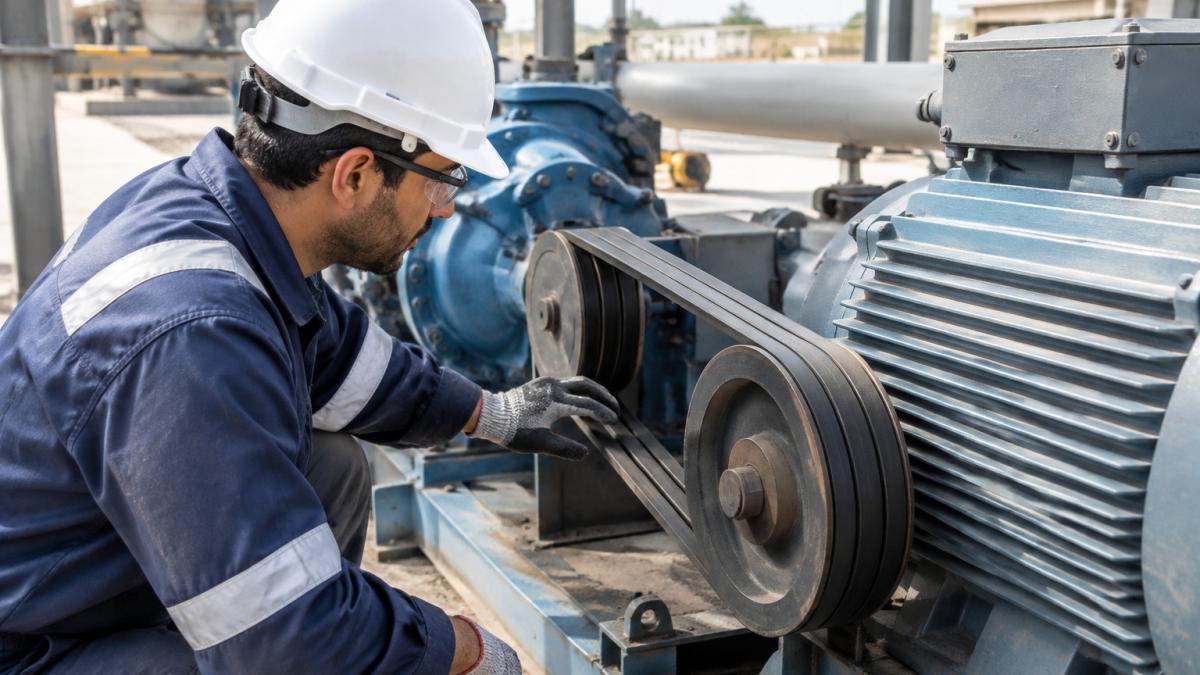
Watch for squealing at startup or under load, speed loss, a burning-rubber smell, belt drift, glazed belt faces, and visible cracks, fraying or dust. Several signs at once warrant a closer look.
Industrial Belt Slippage Causes and How to Confirm Them
Work through root causes in order before touching the belt: belt tension (a loose belt cannot grip), pulley condition (worn grooves or polished lagging reduce friction), then contamination from water, oil, dust or debris.
Confirm by checking tension with a gauge against the manufacturer’s specification, inspecting pulley grooves and lagging, looking for oil, water or material buildup, and comparing belt speed with pulley speed to estimate slip. Do not assume tension is the answer without checking pulleys and contamination first; tightening a belt on a worn pulley only speeds up the damage.
How to Fix a Slipping Industrial Belt, Step by Step
Lock out the equipment before any inspection or adjustment.
- Isolate and lock out the drive. Confirm zero energy.
- Clean the belt and pulleys. Remove oil, dust and debris.
- Reset the tension to the manufacturer’s specification.
- Inspect and replace worn pulleys or lagging if grooves are polished.
- Replace the belt if it is cracked, glazed or badly frayed.
- Run the drive and recheck speed to confirm the slip is gone.
| Symptom | Likely cause | First fix |
|---|---|---|
| Squealing at startup | Loose belt | Reset tension |
| Speed loss under load | Worn pulley or lagging | Replace pulley lagging |
| Burning-rubber smell | Glazed or oily belt | Clean, then replace belt |
If you need replacement V-belts or conveyor belting, industrial belt drive selection guidance can help you confirm specifications before ordering. Pricing depends on quantity, dates and delivery, so check the AQUIL STAR General Trading LLC website or request a quote for current figures.
Frequently Asked Questions
How do you know if a belt is slipping?
The most common signs are a squealing or chirping noise at start-up or under load, a burning rubber smell, visible shiny or glazed belt surfaces, and a driven component running slower than its rated speed. Measure the speed of the driven pulley with a tachometer and compare it to the driver. A gap of several percent under normal load points to slippage. Check the belt for glazing and cracking at the same time, since these confirm the belt is losing grip rather than being misaligned.
What are the main causes of industrial belt slippage?
Insufficient belt tension is the leading cause, followed by worn or glazed belts and pulleys with polished grooves or worn lagging. Oil, water, dust or material buildup on the pulley reduces friction, and overloading the drive forces the belt beyond its grip. Confirm the cause by checking tension, inspecting pulley grooves and looking for contamination before replacing any part.
How do you fix a slipping industrial belt?
First lock out and isolate the drive. Clean oil and debris from the belt and pulleys, then check and correct belt tension to the manufacturer’s specification. If grooves are polished or the belt is glazed, replace the belt and, where needed, the pulley or lagging together so the new belt seats correctly. Do not rely on belt dressing as a permanent fix, because it masks the cause and can damage the belt. Recheck speed after running the drive under load.

Leave a Reply